Septic systems
Septic systems dug, set and inspected by one crew
Tanks, leach lines, lift stations and grease traps installed to county and state codes with our own mini excavators, plus licensed home-buying inspections.
Chapter 01
What a working septic system is made of
A septic system is a short chain of parts that all have to be right. Wastewater leaves the house in a sewer line, settles in a tank, passes baffles that keep solids from escaping, and moves through a distribution box into leach lines laid in filter fabric, where the soil finishes the job. Where gravity will not carry the flow, a lift station moves it. Where a commercial kitchen is involved, a grease trap sits in front of the whole run.
NWA C&S Plumbing installs those parts to county and state codes, from the tank and risers to the sewer and water lines that tie them to the building. The parts matter, but so does the layout: the depth of the lines, the fall of the pipe and where the field sits on your lot. We work around Springdale, Fayetteville, Rogers and Bentonville, where clay soil and sloping lots make every site a different dig.
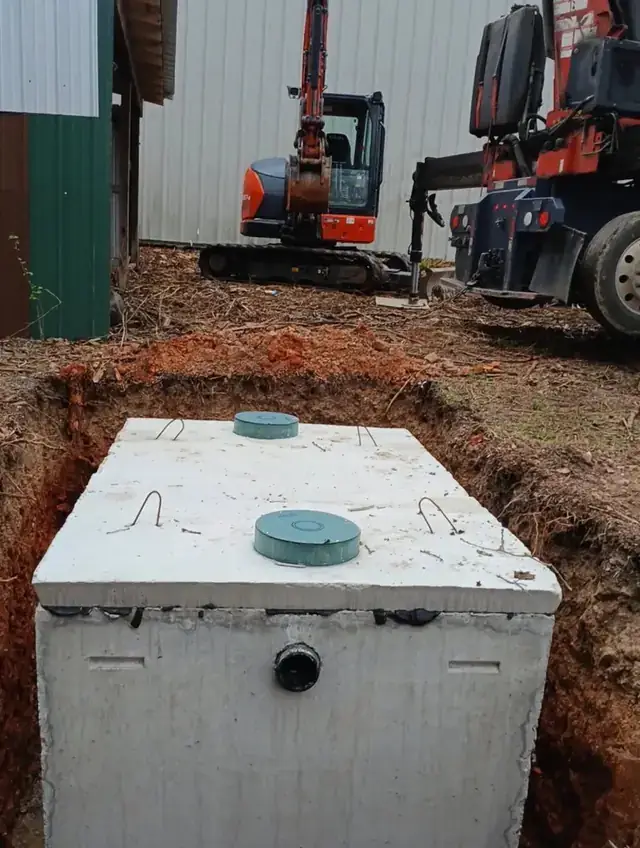
Freshly set concrete septic tank with green risers in a red clay excavation, mini excavator and service truck behind
We dig it ourselves, with our own mini excavators
Plenty of plumbers hand the trench to someone else. We do not. Our own mini excavators dig the tank pit, cut the leach line trenches and open the path for the sewer tie-in, so the person planning the plumbing is on the same site as the person moving the dirt. Large excavations are no problem, and small excavation gets done right.
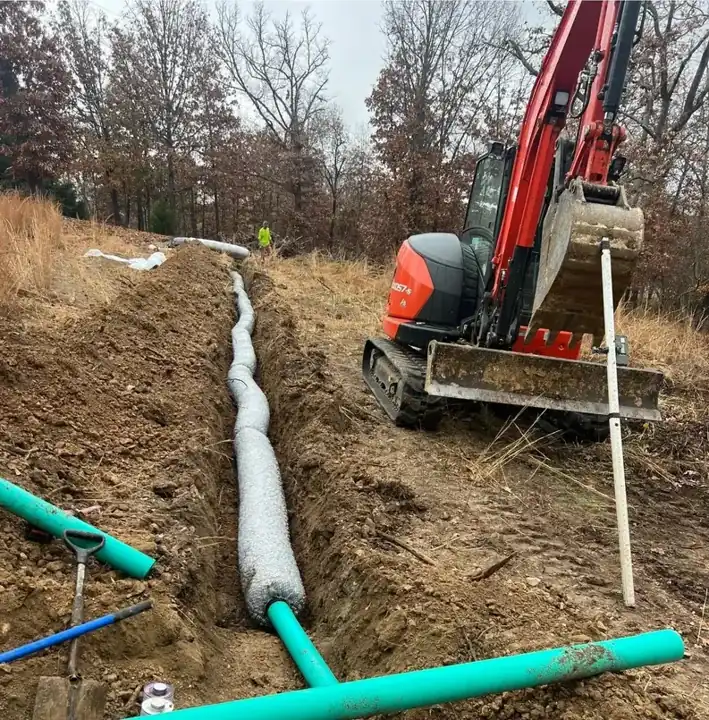
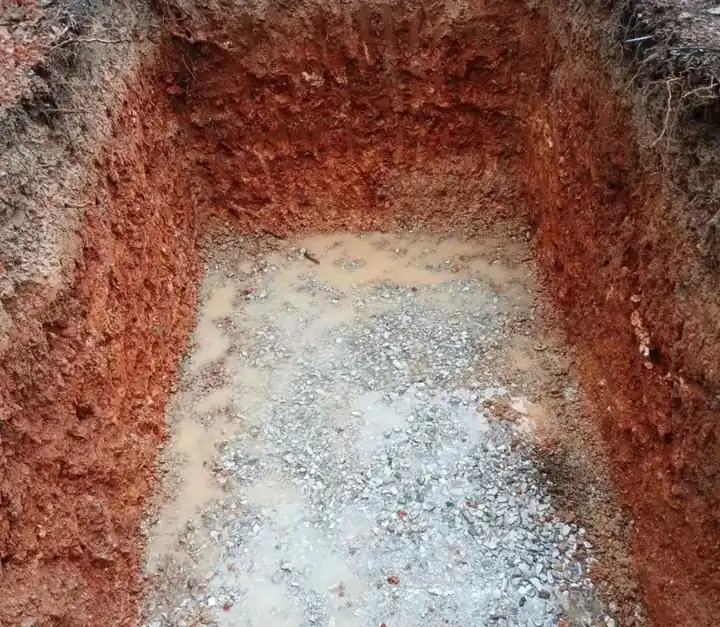
That matters most on hard ground. Rusty White wrote in a Google review about a septic system set on the side of a hill that was not easy to dig with equipment, and about an installer who finished quickly and passed inspection on the first attempt. Further down this page you can see what a leveled gravel base for a tank and a leach line in filter fabric look like in a fresh trench.
Chapter 03
Before you backfill, before you buy, and when it starts to misbehave
A septic system is buried, so the time to look at it is before the dirt goes back. We bring the same eye to a new install and to an older system on a house you are thinking of buying. Baffles, risers, the distribution box and the condition of the lines each tell you something about what is happening underground.
If a system is already in the ground and acting up, slow drains, gurgling, wet or unusually green ground over the field and a smell near the tank are the usual first signs. Call (479) 790-3527 and we will talk through what you are seeing before anyone digs. Pumping intervals vary with household size and tank size, so treat any schedule you read online as a general guide, not a promise.
Rated 4.8 from 136 Google reviews. Licensed and insured in the state of Arkansas. Call (479) 790-3527, Monday to Friday 7:30 AM to 4:30 PM.
What we install and repair
Every part between the house and the field.
One crew handles the whole run, so nothing falls between the plumber and the excavator.
- Lift stationsMove wastewater uphill or across a lot when gravity alone will not carry it to the tank or field.
- Grease trapsCatch fats and oils from commercial kitchens before they reach the tank and line.
- Water linesNew supply lines trenched from the main or well to the building, dug by our own crew.
- RisersBring the tank lids up to grade so the tank can be found, opened and serviced without digging.
- BafflesKeep solids in the tank and out of the field, and worth checking on any older system.
- PipesSolid and perforated lines laid to the right fall, with fittings that stay tight under backfill.
- Distribution boxesSplit the flow evenly across the leach lines so one trench does not carry the whole load.
- Sewer linesThe run from the house to the tank, installed new or repaired where a section has failed.
- Other excavation workTrenches, pads and pits for the job, large or small, with our own mini excavators.
From our own jobs
The trench is where a septic system is won.
These two photos come from our own installs. The base under a tank and the fall of a leach line decide how the system behaves long after the lawn grows back.
“Jose installed my septic system, which was located on the side of a hill and not easy to dig with equipment. Despite the challenging conditions, he completed the job quickly and passed inspection on the first attempt.”
That review came from a new home build, where the same crew also did the slab rough-in and final plumbing. See new construction plumbing for how a build runs from the slab to the final set.
Home-buying septic inspections
Buying or selling a house with a septic system
Most banks and lending institutions require a complete septic system inspection before a sale closes. We provide licensed inspection services with a quick turnaround, so the inspection does not become the reason a closing slips.
For a buyer, the inspection is the only way to know what is buried in the yard. A failed system found after closing is the expensive surprise. For a seller, knowing the condition of the tank, baffles and field early gives you time to deal with anything before an offer is on the table.
If the lender wants the inspection and the house also needs sewer work, ask us about the line from the house to the tank, which we can scope with a camera. Our sewer line repair page explains how, and drain cleaning covers the lines inside the house.