How to Tell Your Main Sewer Line Is Clogged
One slow sink is a drain problem. Several backed-up drains at once usually point farther down the line.
October 1, 2026 · 4 min read
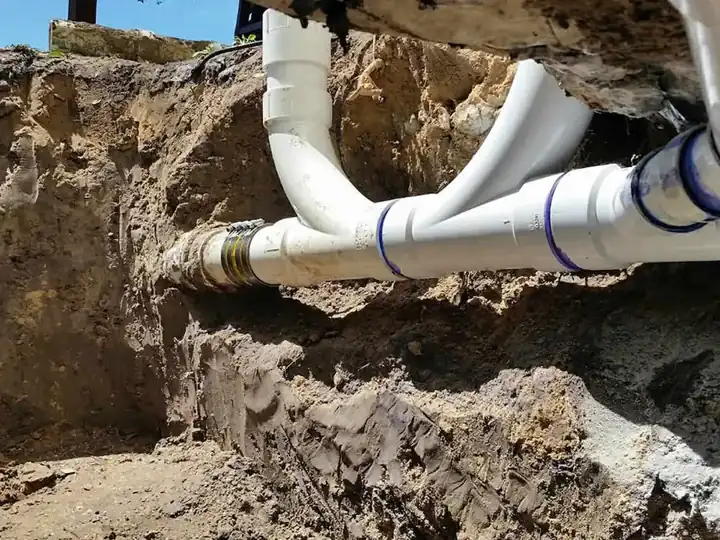
Every drain in your house eventually feeds into one main sewer line that carries wastewater out to the street or to your septic tank. When that line is partly or fully blocked, the problem is no longer a single clogged sink. It shows up everywhere at once, and plunging one fixture rarely solves it. Here is how to tell the difference and what usually happens next.
Signs it is the main line and not just one drain
- More than one drain backing up or running slow at the same time, such as a tub, a toilet and a floor drain.
- The lowest drain in the house backs up first, often a basement or ground-level floor drain or a tub on the lowest floor.
- Gurgling sounds from drains or toilets when another fixture, like the washing machine, is draining.
- A raw sewage smell inside the house or out in the yard.
- A soggy or sunken strip of lawn running in a line from the house toward the street.
- Toilets that flush slowly or bubble even after plunging.
The lowest-drain clue is the one plumbers pay attention to. Wastewater follows gravity, so when the main is blocked, it comes up at the lowest opening first. If a shower in the basement is flooding and the upstairs bathrooms still drain fine, that points toward the main line.
What causes a main line to clog
Sometimes the cause is simple, like grease, wipes or other items that should not have gone down the drain. More often in older neighborhoods, the pipe itself is the problem. Tree roots are a common culprit: they find tiny gaps at joints, grow into the pipe looking for moisture and then catch everything that passes through. Many older homes in parts of Fayetteville and Rogers were built with clay pipe, which cracks and separates at joints, or with Orangeburg, a tar-paper-and-pitch pipe that can sag, flatten or collapse as it ages. Ground movement in clay soil can also shift a line enough to create a low spot where waste collects.
Why a camera inspection comes first
You can run a cable through a line and clear the blockage, and sometimes that is all it needs. But if the pipe is cracked, rooted or bellied, a blockage will likely come back. That is why a camera inspection is the most useful first step. A small camera on a flexible cable goes into the line through a cleanout, and a plumber can see the exact location, cause and extent of the problem on a screen. NWA C&S Plumbing takes this camera-first approach to sewer problems, because guessing at what is underground is a good way to dig in the wrong place.
Repair options once you know what is wrong
The right fix depends on what the camera shows. The common options are:
- Spot repair: digging down and replacing one damaged section when the rest of the line is in good shape.
- Trenchless pipe lining: a resin-coated liner is pulled into the existing pipe and cured to form a new pipe inside the old one, which can mean much less digging.
- Pipe bursting: a new pipe is pulled through the old line while the old pipe is broken apart in place, again limiting how much of the yard is opened up.
- Full line replacement: removing the old line and installing a new one when the pipe is badly failed, collapsed or in poor shape along most of its length.
Not every method fits every situation. Depth, access, the length of the damaged section and the type of pipe all affect which one makes sense. A good plumber will show you the camera footage and explain why they are recommending one approach over another.
A word about insurance
Standard homeowners insurance typically does not cover sewer line repair unless your policy includes a specific sewer or service line rider. Policies vary, so call your insurance company or agent and ask before a problem happens. If you already have a backup in progress, ask what documentation they want, such as camera footage or a written report.
What to do right now
If several drains are backing up, stop running water through the house as much as you can, since every flush and load of laundry just sends more water to a line that cannot take it. Keep people and pets away from any sewage that has come up, and do not pour chemical drain openers into a main line blockage. Then call a plumber and ask about a camera inspection so you can fix the cause and not just the symptom.
NWA C&S Plumbing handles drain cleaning and sewer line repair for homes and businesses around Springdale, Fayetteville, Rogers and Bentonville, and estimates are free. Call (479) 790-3527. Hablamos Español.
NWA C&S Plumbing, (479) 790-3527
Call (479) 790-3527More articles
Septic Inspections Before You Buy or Sell a Home in Northwest Arkansas
A septic inspection is often a condition of closing, so it helps to know what the inspector checks before the contract clock starts.
Signs of a Slab Leak or Hidden Water Leak in Your Home
Most hidden leaks give hints long before anything drips through a ceiling, if you know what to listen and feel for.