Repair or Replace Your Water Heater? A Northwest Arkansas Guide
A simple set of rules helps you decide whether a repair is worth the money or whether the old tank has had its day.
October 1, 2026 · 4 min read
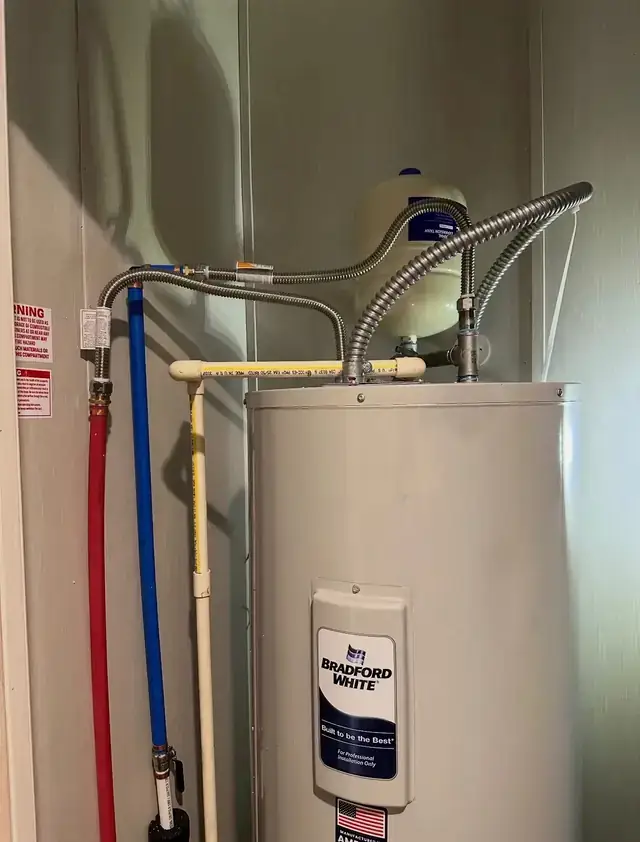
A cold shower is a bad way to find out your water heater is in trouble. In Springdale, Fayetteville, Rogers and Bentonville, a lot of homeowners hit the same question at the same moment: is this worth fixing, or is it time for a new one? There is no perfect answer for every house, but there are some dependable rules of thumb that make the decision a lot less stressful.
Why hard water matters here
Northwest Arkansas water is hard, meaning it carries a lot of dissolved minerals. When water is heated, those minerals settle out and collect as sediment on the bottom of a tank. Over time that layer insulates the water from the burner or the lower element, makes the heater work harder and can speed up corrosion. In plain terms, hard water is brutal on water heaters, and it is one reason tanks here may not reach the long end of their expected life.
When a repair usually makes sense
As a rule of thumb, repair is often the right call when the heater is under about 8 to 10 years old, the problem is one isolated part, and the repair would cost less than roughly 40 to 50 percent of a new unit installed. Parts that commonly fail on an otherwise healthy tank include:
- A heating element or thermostat on an electric unit, which can cause no hot water or water that never gets hot enough.
- A pilot light or thermocouple on a gas unit, which can cause the pilot to keep going out.
- A worn anode rod, the sacrificial rod that helps protect the tank from corrosion.
- A leaking valve, fitting or connection at the top of the tank, as opposed to a leak from the tank body itself.
Ask for the repair and the replacement figures in writing so you can compare them side by side.
When replacement is the better move
Replacement usually wins when the heater is in the range of 10 to 15 years or more, when you see rust in the hot water or around the base, or when water is leaking from the tank body itself. A leak from the tank means the steel has failed, and no part swap will fix that. Tank water heaters typically last about 8 to 12 years, so a unit near the end of that window that needs a repair is often a bad bet. You may spend money fixing one thing only to lose the next part a few months later.
Warning signs that your tank is aging
- Popping, rumbling or banging noises as the heater runs, usually caused by sediment baked onto the bottom.
- Rusty or cloudy hot water that clears when you run the cold side.
- Water that fluctuates between hot and lukewarm.
- Moisture or rust streaks around the base of the tank.
- A heater that runs constantly yet never keeps up with the household.
Draining some water out of the bottom of the tank once in a while helps carry sediment out, and in a hard water area it is worth discussing with a plumber. It will not fix a rusted-out tank or a failed part, and a tank that has not been flushed for many years can sometimes start leaking at the drain once it is disturbed. If your heater is old, ask someone to look at it before you start turning valves.
Tank or tankless?
A tankless heater heats water as you use it instead of storing it, so it does not run out in the middle of a shower. Tankless units can be a good fit for some homes, but they also need the right gas supply, venting and sometimes updated plumbing to work well, and they still benefit from regular service in hard water. A conventional tank is simpler and often the more familiar choice. The best option depends on your house, your family size and how you use hot water, and a plumber who installs both can help you weigh them.
What a code-compliant installation includes
Whichever way you go, a replacement is a chance to correct older setups. Plumbers often find outdated venting, a missing thermal expansion tank, or no proper drain pan under a heater that sits somewhere a leak could do damage. An expansion tank gives heated water somewhere to expand to when the system is closed, which protects the heater and your plumbing. A drain pan catches a slow leak before it ruins a floor. Ask what will be included, and ask that the sizing fit your household instead of whatever happens to be on the truck.
NWA C&S Plumbing repairs and replaces tank water heaters and installs and services tankless units, and estimates are free. If you are in Springdale, Fayetteville, Rogers, Bentonville or nearby and your water heater is acting up, call (479) 790-3527. Hablamos Español.
NWA C&S Plumbing, (479) 790-3527
Call (479) 790-3527More articles
Septic Inspections Before You Buy or Sell a Home in Northwest Arkansas
A septic inspection is often a condition of closing, so it helps to know what the inspector checks before the contract clock starts.
Signs of a Slab Leak or Hidden Water Leak in Your Home
Most hidden leaks give hints long before anything drips through a ceiling, if you know what to listen and feel for.