Getting Your Pipes Through an Arkansas Winter
Arkansas winters are mild until they are not, and a few hours of hard freeze is all it takes to catch an unprepared house off guard.
October 1, 2026 · 4 min read
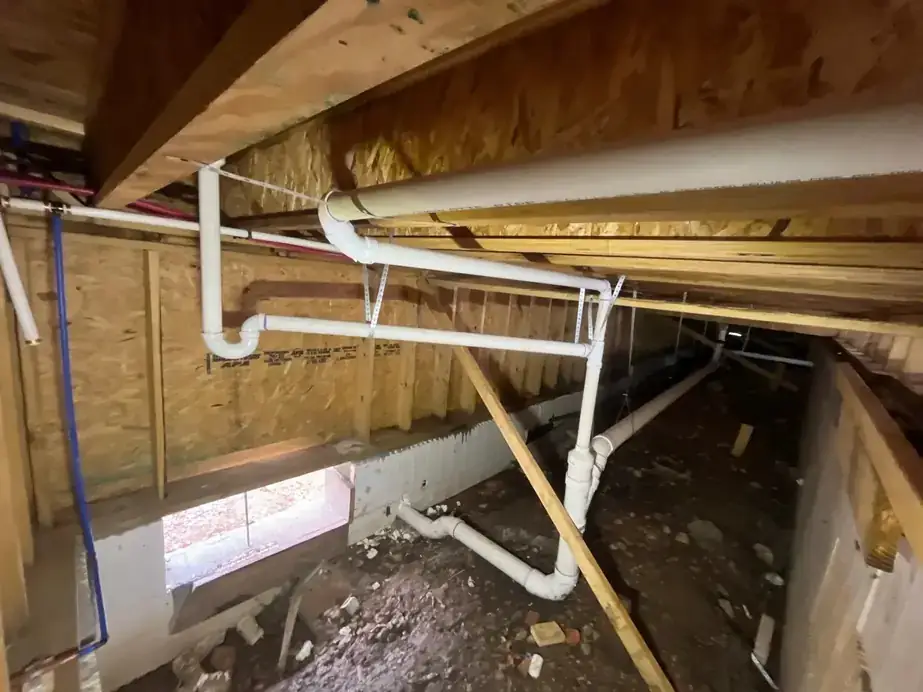
Winters in Springdale, Fayetteville, Rogers and Bentonville swing between mild afternoons and sudden hard freezes, and plumbing is built for the mild part. When temperatures drop well below freezing for hours, water inside a pipe can turn to ice, expand and put pressure on the line. The pipe often does not fail where the ice forms but at a weak spot nearby. A little preparation in the fall, plus a plan for when a cold snap is on the way, goes a long way.
Which pipes are most at risk
- Pipes in crawlspaces, especially where vents are open or insulation is thin or missing.
- Water lines in exterior walls, where there is little insulation between the pipe and the outdoor air.
- Pipes in unheated garages, attics, utility rooms and basements.
- Hose bibs, the outdoor faucets, and the short runs of pipe behind them.
- Lines near foundation vents, cracks or gaps that let cold air blow straight on them.
- Pipes under kitchen and bathroom sinks along outside walls.
Before the cold arrives
Start with the outdoors. Disconnect garden hoses, since a hose left on a bib can trap water and freeze the faucet and the pipe behind it. If your home has an inside shutoff for outdoor faucets, close it and drain the line. Foam covers for hose bibs are cheap and help in a pinch. Then look at your crawlspace: seal obvious gaps and make sure the pipes there are insulated, because a few extra minutes in the fall can protect lines that nobody sees all winter.
Inside, open cabinet doors under sinks on exterior walls so warm room air can reach the pipes. Keep your thermostat set to a reasonable temperature even if you are away, and avoid turning the heat all the way down overnight in a hard freeze. If you have a vacation home or a place that sits empty, think about who can check it during cold weather.
When the forecast calls for a deep freeze, let faucets drip. Moving water is harder to freeze, and a slow drip also relieves pressure that builds between an ice blockage and the faucet. Choose the faucets on the exterior walls or farthest from where the water enters the house, and let both hot and cold drip a little. It uses some water, but that is often far less than a burst pipe will release.
Know where your main shutoff is
This is the one step that matters most if a pipe breaks. Find your main water shutoff valve before winter, make sure everyone in the house knows where it is and make sure it turns. It is commonly located where the water line enters the house, in a basement or utility area, a crawlspace, a garage or near the water meter outside. If you cannot find it or it will not move, call a plumber to look at it now, not at midnight with water spraying across the floor.
If a pipe freezes
If you turn on a faucet and only a trickle comes out, or nothing, a frozen pipe is a likely reason. Leave the faucet open and shut off the main water valve if you see signs of a crack. Warm the area gently with a hair dryer, a heating pad or warm towels, moving from the faucet back toward the frozen section. Never use an open flame, a torch or a space heater pointed at wet areas. If you cannot reach the frozen section or cannot thaw it, stop and call a plumber.
If a pipe bursts
- Shut off the main water valve right away.
- Turn off the electricity to wet areas if you can do it safely, and stay out of standing water near outlets and appliances.
- Open faucets to drain what is left in the lines.
- Take photos of the damage for insurance and move belongings out of the water's path.
- Call a plumber to repair the line, and call your insurance company about the damage.
Why a thawed pipe can still leak
Here is a surprise that catches many homeowners: a frozen pipe may have cracked without leaking while it was frozen, because the ice itself plugs the crack. Once it thaws, water starts running through the break and the leak appears. That is why it is smart to check the line after a freeze, even if everything seems fine. Look for stains, drips, damp insulation or a water meter that keeps moving with everything turned off, and ask a plumber to look anything over that seems suspicious.
If you have a frozen pipe, a leak after a freeze or just want a plumber to look at your crawlspace lines before winter arrives, NWA C&S Plumbing can help, and estimates are free. Call (479) 790-3527. Hablamos Español.
NWA C&S Plumbing, (479) 790-3527
Call (479) 790-3527More articles
Septic Inspections Before You Buy or Sell a Home in Northwest Arkansas
A septic inspection is often a condition of closing, so it helps to know what the inspector checks before the contract clock starts.
Signs of a Slab Leak or Hidden Water Leak in Your Home
Most hidden leaks give hints long before anything drips through a ceiling, if you know what to listen and feel for.